The Field Plan Workbook
Turn past election results into your win number, find the voters you need, write your door, phone and text scripts, and plan every week through Election Day, with a worksheet for every step.
- 40-page PDF
- Instant download
- A worked example on every page
Everything you need to do in the field — from plan to votes.
You've done the research. You know your district, your numbers and your message. This workbook is where all of that planning turns into action: finding the voters you need, knocking the doors, making the calls, and turning out every supporter on Election Day. That's the part that really matters, because you can't win without votes.
Every number feeds the next.
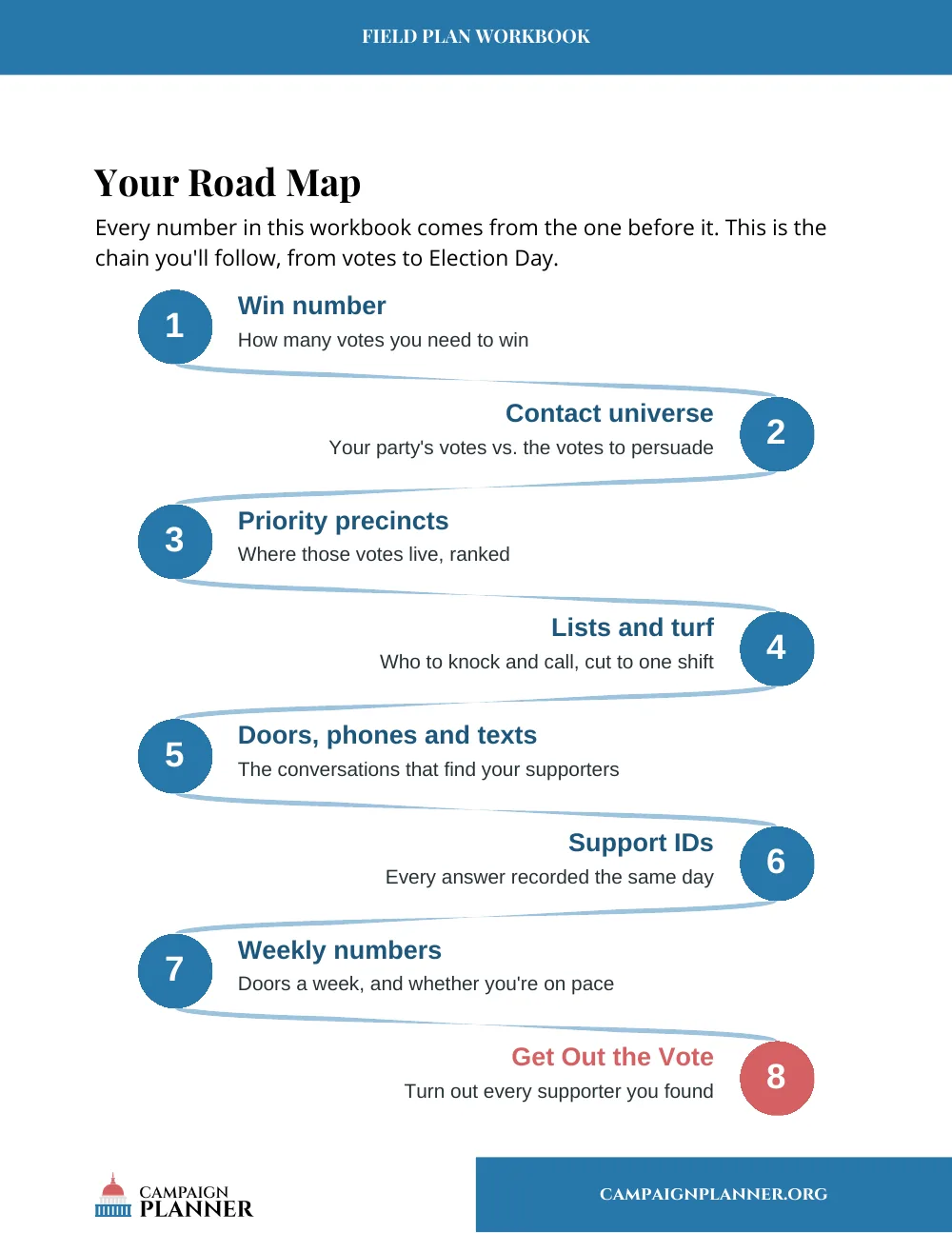
The workbook follows one chain from your first number to Election Day: your win number, your contact universe, your priority precincts, lists and turf, doors, phones and texts, support IDs, your weekly numbers and Get Out the Vote. Work front to back. Each page builds on the one before it, and every worksheet shows a filled-in example next to the blanks for your own race.
A worksheet for every step.
Start with a number.
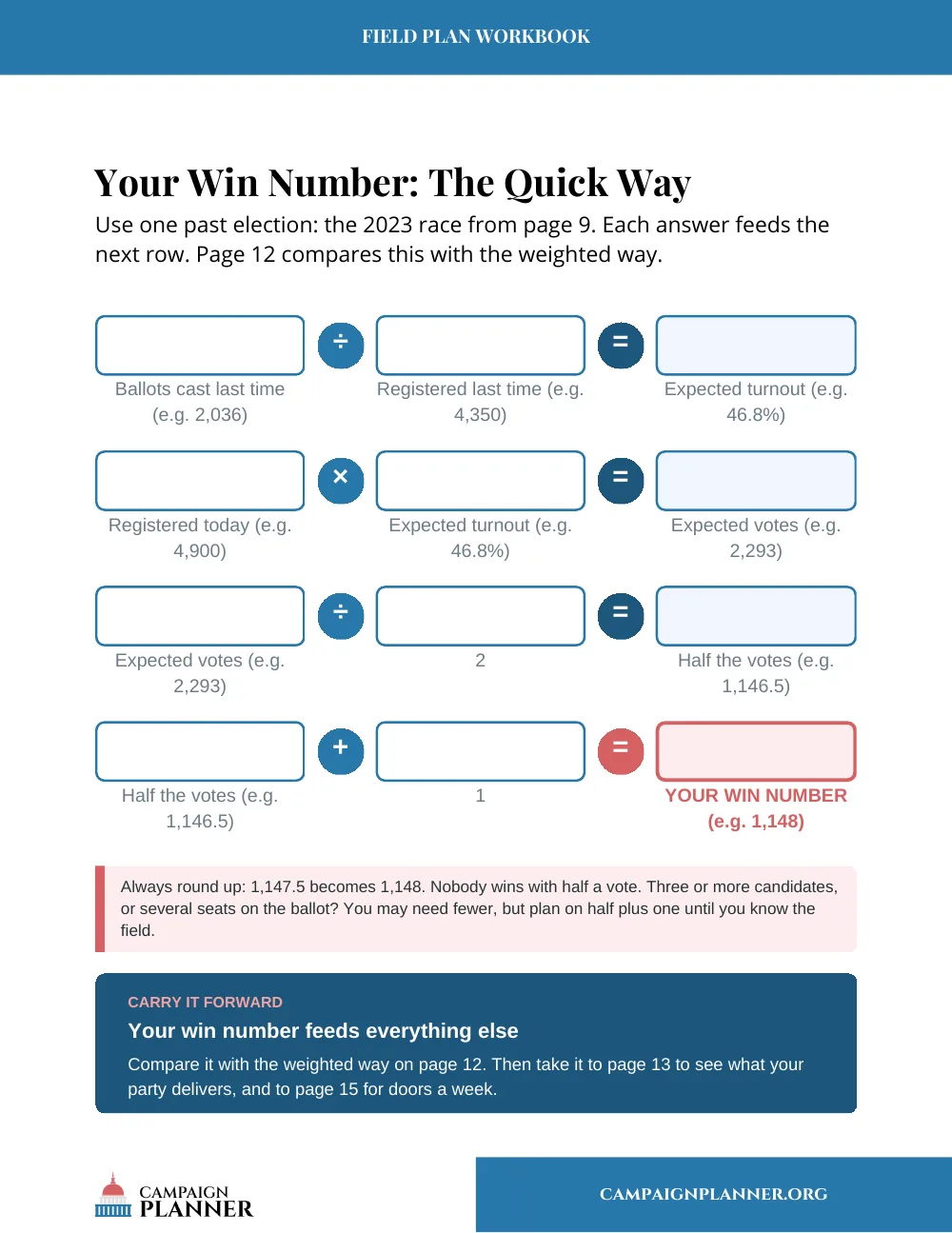
Before you knock on a single door, you need to know how many votes it takes to win. You'll pull past results from your county and work out your win number two ways, then check one against the other so the number you plan on is real.
- Your win number the quick way, from one past election, and the weighted way, from two
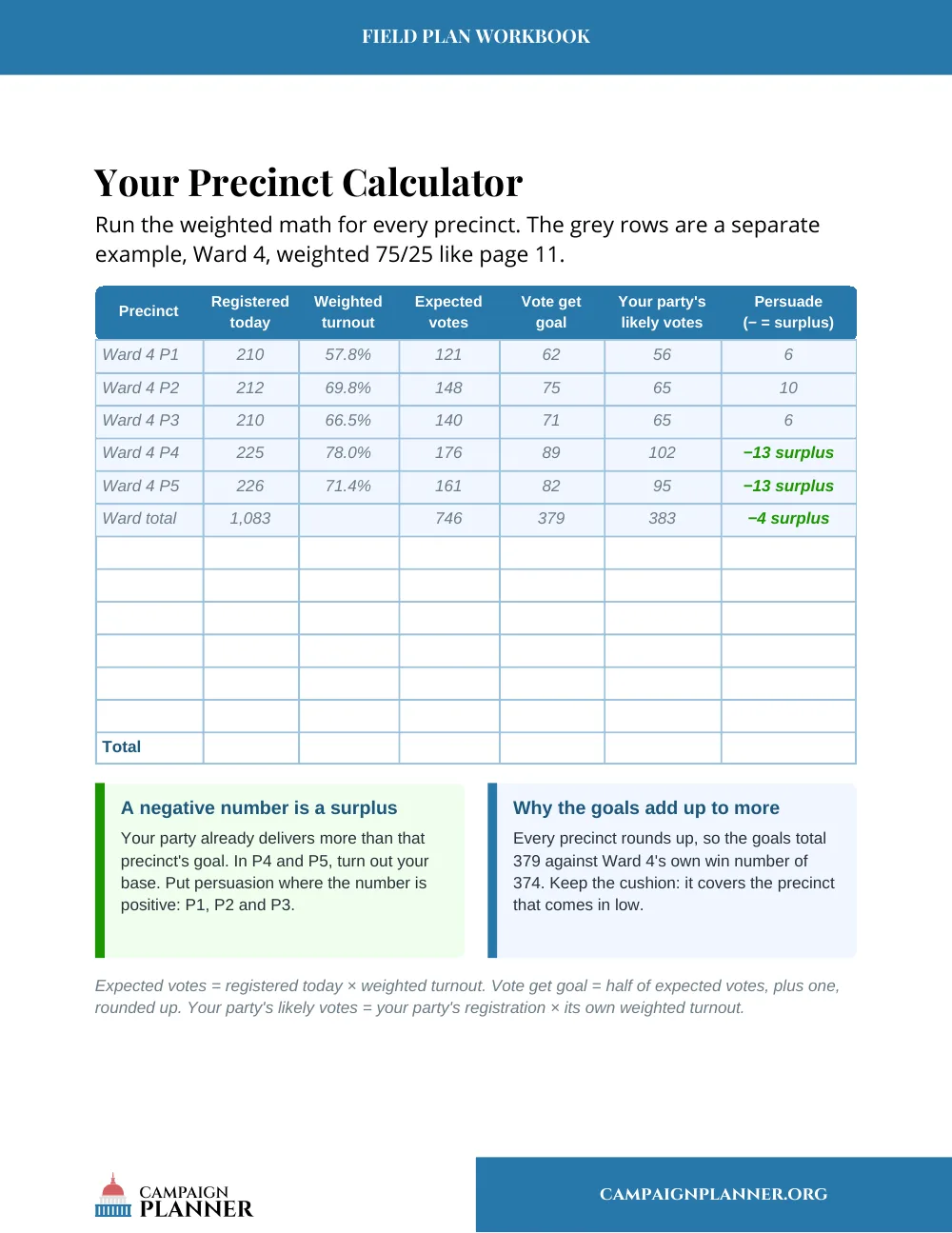
- What each party delivers, and whether you have an advantage or a gap to close
- A vote goal for every precinct, with surpluses flagged
- Your weekly door number, shifts and volunteer sign-ups
Find the voters.
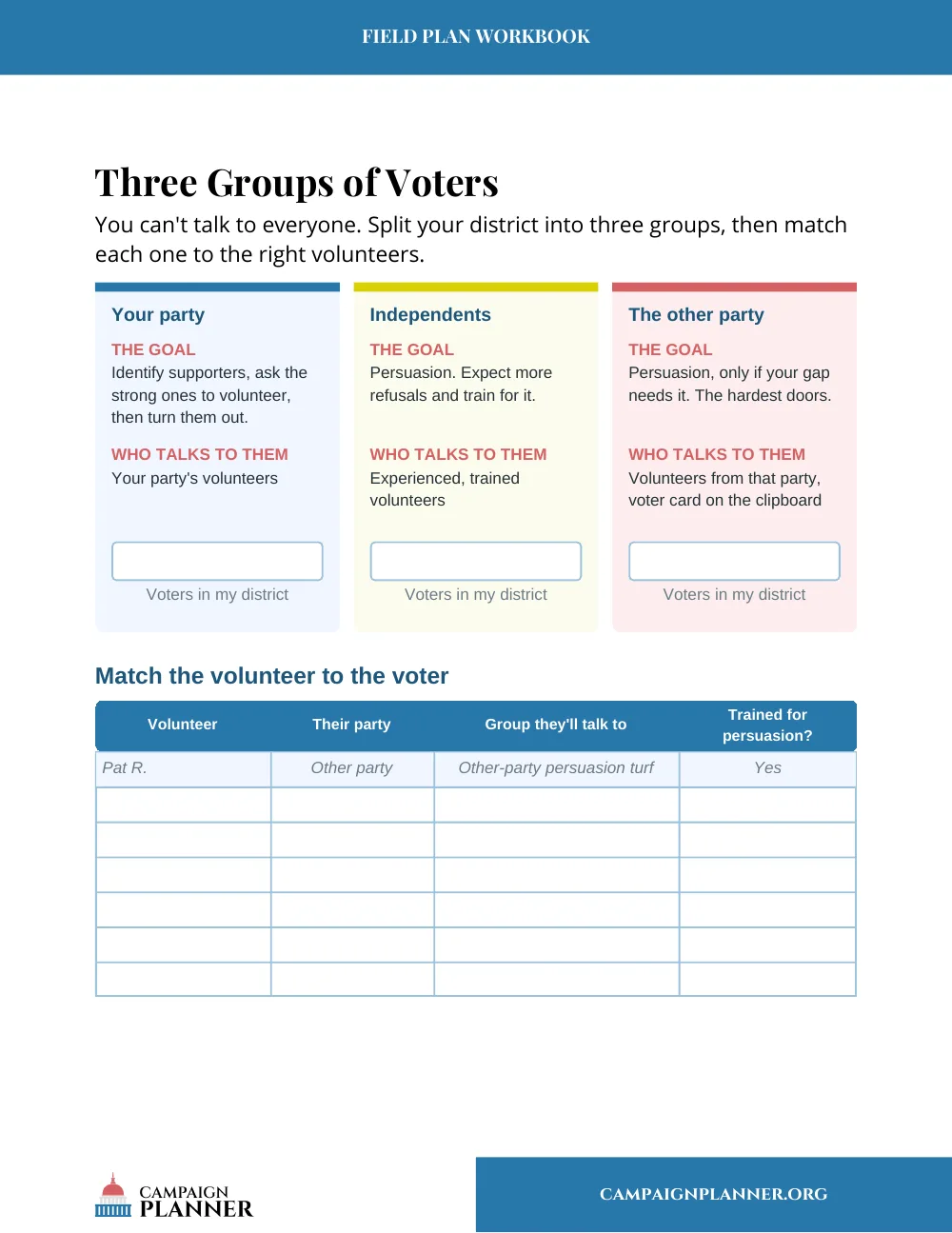
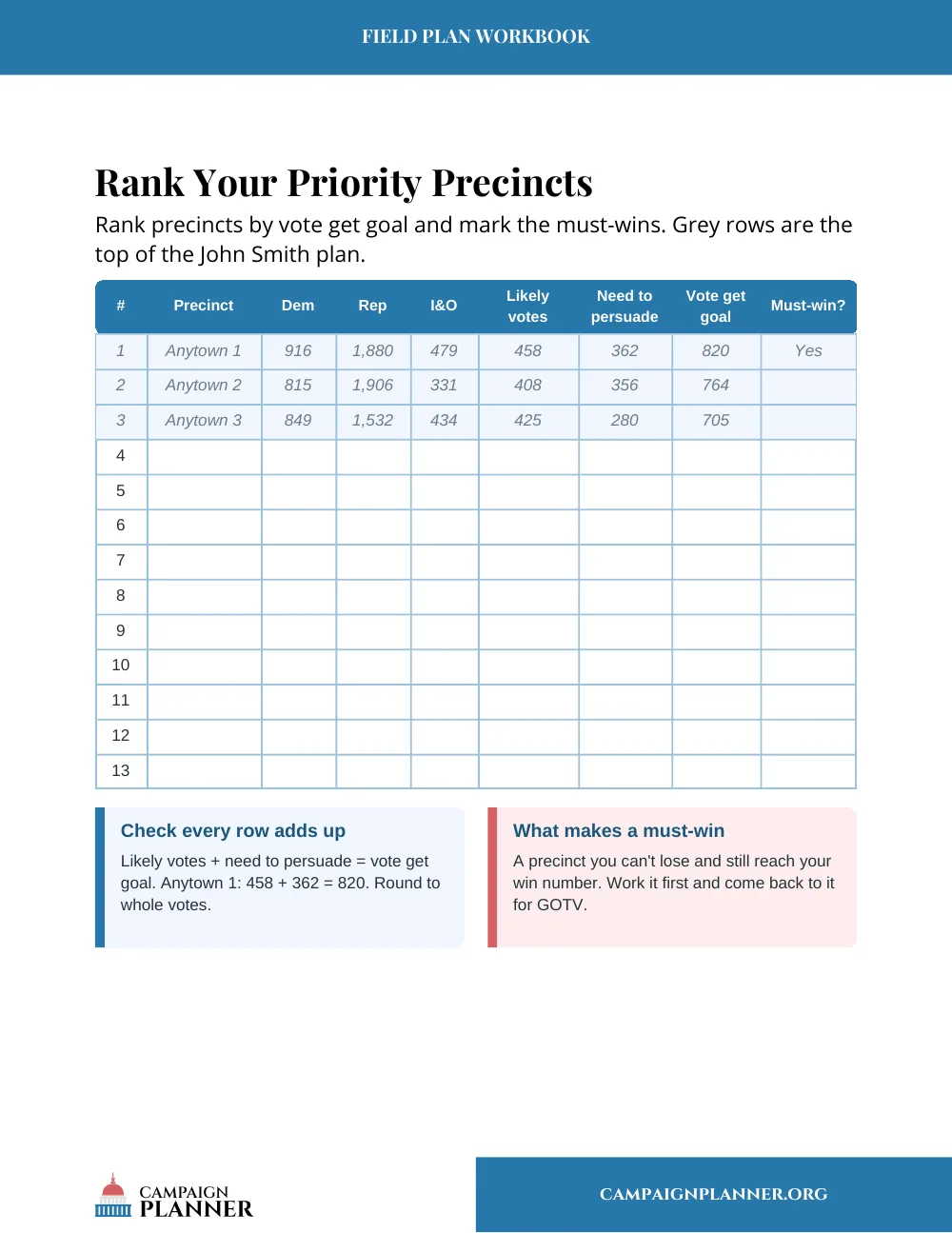
Get the voter file, choose the tools you'll actually use, and split your district into the voters you turn out, the ones you persuade and the ones you leave alone. Then rank the precincts you have to win and cut turf sized to a single volunteer shift.
- Where to get the voter file, what it costs and which fields matter
- Field software sized to your budget
- Three groups of voters, and which volunteers talk to each one
- Priority precincts, call lists and a turf log
Know what to say.
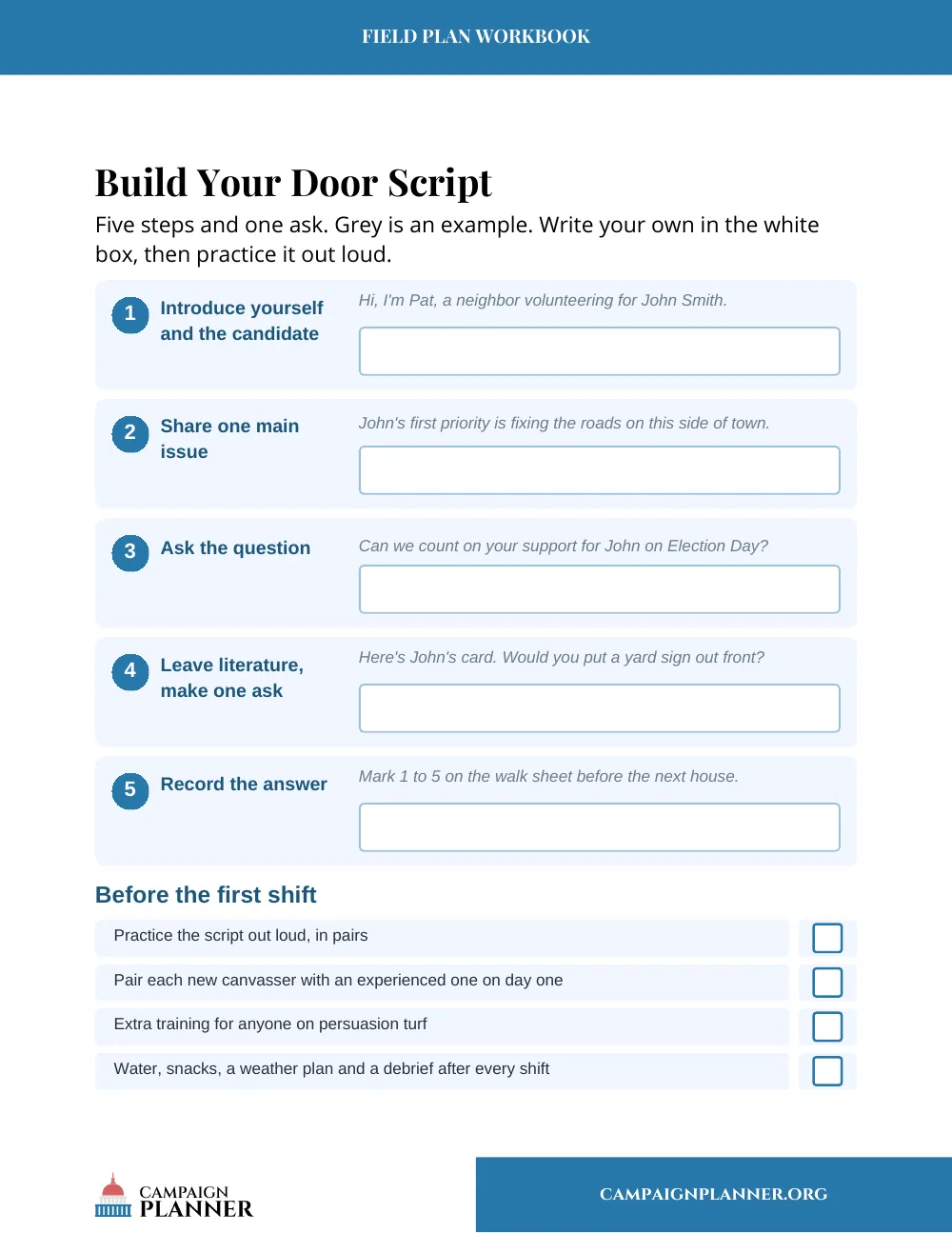
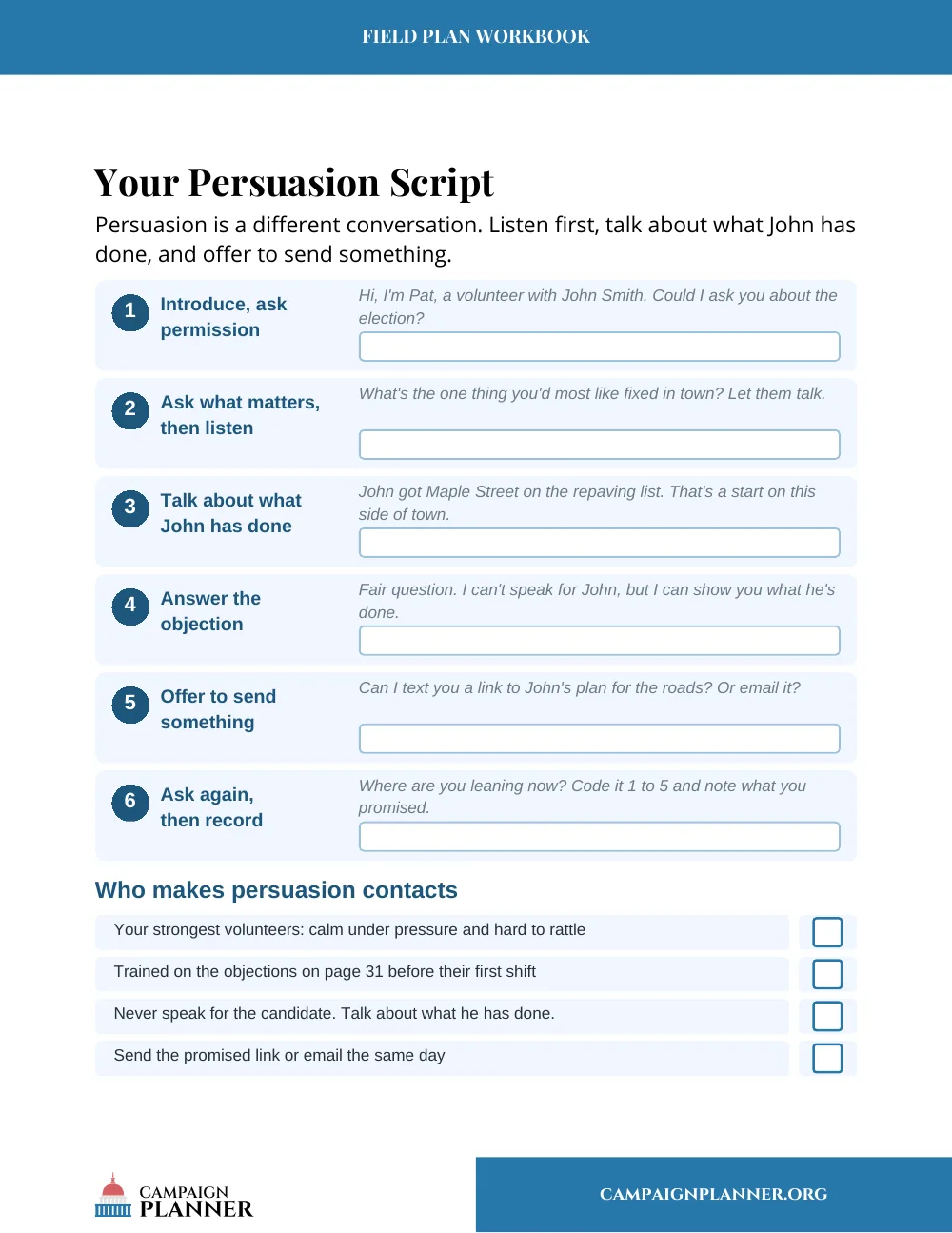
Every channel gets its own page. Scripts open with the issues voters care about before any ask, persuasion gets its own script for your strongest volunteers, and a candidate fact sheet keeps everyone talking about what your candidate has done, never speaking for them.
- A door script and a canvass shift tally sheet
- An ID call script and a separate persuasion script
- Texts that open with an issue, plus answers to the replies you'll get
- A candidate fact sheet for every volunteer
Run it every week.
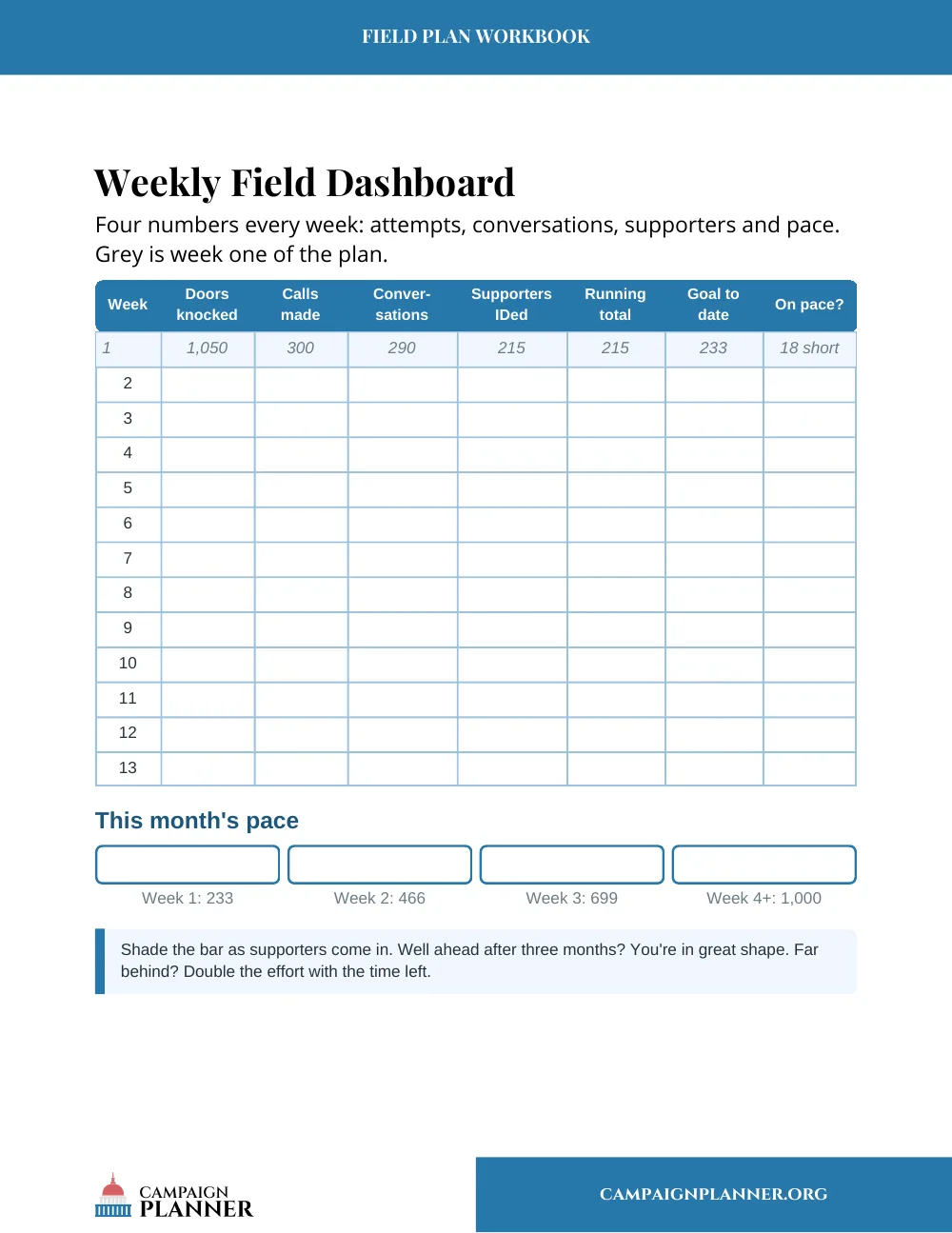
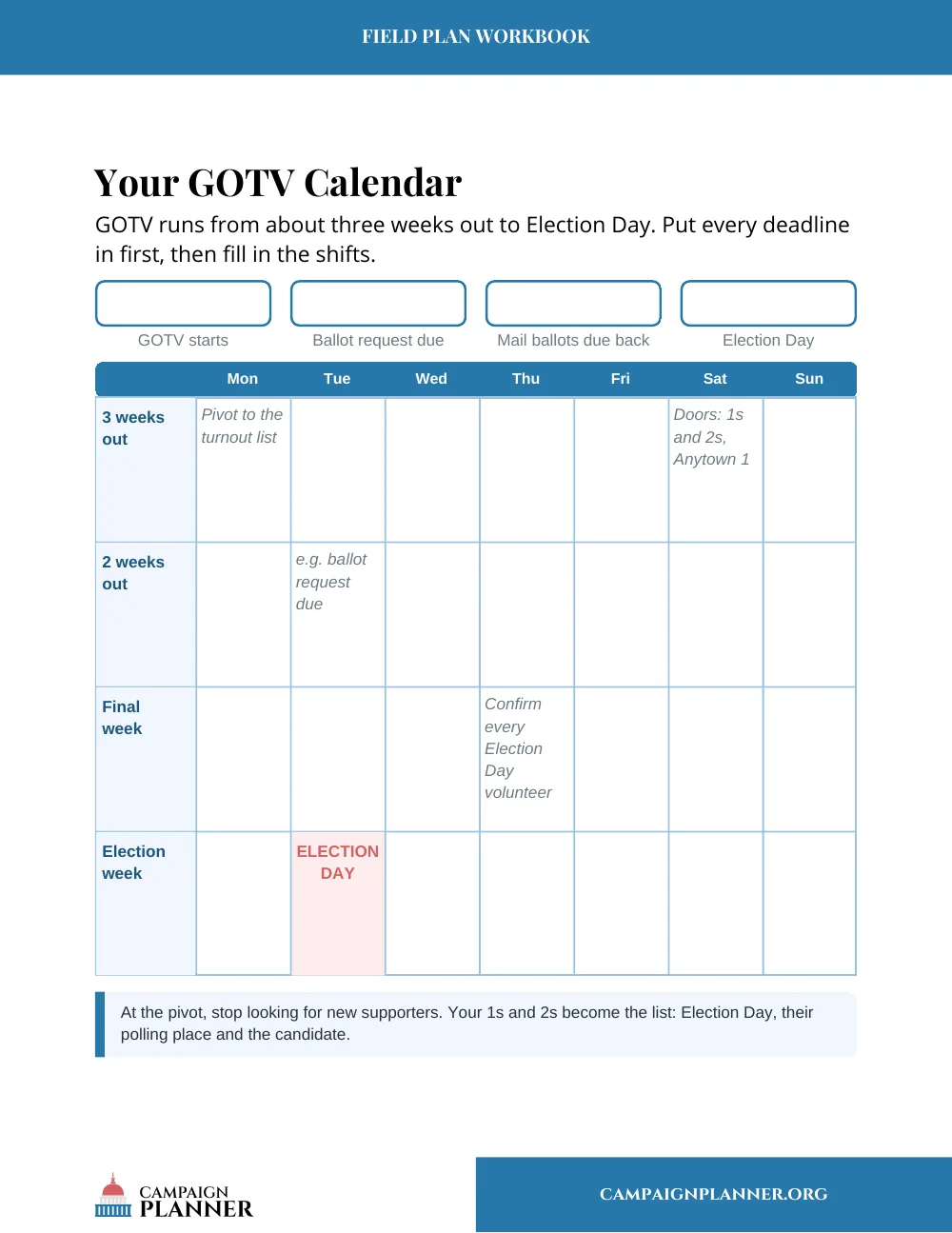
The last section keeps the plan moving. Every volunteer scores voters the same way, the data stays clean, and a weekly dashboard tells you whether you're on pace. Then the GOTV calendar and Election Day plan turn every supporter you found into a vote.
- A 1-to-5 support scale and a weekly clean-data checklist
- A weekly field dashboard and monthly pace check
- No-show math and what to do when you miss a benchmark
- A GOTV calendar and a full Election Day plan
What's included.
Built from the field plans behind local races that won, with a worked example on every page.
- 40 pages, with a worked example and room for your own numbers on every worksheet
- Your win number two ways, quick and weighted, and how to check one against the other
- What each party delivers, a vote goal for every precinct, and your weekly door number
- Door, ID call, persuasion and text scripts, plus a candidate fact sheet for your volunteers
- A support scale, weekly dashboard, GOTV calendar and Election Day plan
Built for the people who do the work.
First-time candidates
You've never run a field program. Every worksheet shows a filled-in example, so you can see the answer before you write your own.
Campaign managers and field directors
One plan everyone works from: the numbers, the scripts, the turf and the weekly dashboard, all in one place.
Volunteer leaders
Scripts, a tally sheet and a support scale that every volunteer uses the same way, so the data you collect is data you can use.

A note from Craig.
Local races are won at the door, one conversation at a time. I've knocked them myself, twice, and I've built field plans for candidates at every level of office.
The campaigns that win aren't the ones that knock the most doors. They're the ones that knock the right doors, say the right thing when someone answers, and know every week whether they're on pace.
This workbook is the plan I'd hand any candidate on day one: the math to find your number, the scripts to reach your voters, and the weekly rhythm that carries you to Election Day.
Work through it front to back, and you'll walk into your first canvass knowing exactly how many votes you need and where you're going to find them.
The Field Plan Workbook
Get the workbook that turns your win number into doors, calls and a plan for every week until Election Day.
Prefer to be walked through it? The Field course covers every page of this workbook in video lessons, and what you pay for the workbook counts toward the course. Learn about the Field course →